What Type of Infection Is Most Likely to Be Transmitted to Baby?
Neonatal infection tin be acquired
-
In utero transplacentally or through ruptured membranes
-
In the birth canal during delivery (intrapartum)
-
From external sources after nascency (postpartum)
Bacterial agents include group B streptococci Neonatal Listeriosis Neonatal listeriosis is acquired transplacentally or during or afterwards delivery. Symptoms are those of sepsis. Diagnosis is by culture or polymerase chain reaction testing of mother and babe... read more , enteric gram-negative organisms (primarily Escherichia coli Escherichia coli Infections The gram-negative bacterium Escherichia coli is the most numerous aerobic commensal inhabitant of the big intestine. Certain strains crusade diarrhea, and all can crusade infection when... read more than ), Listeria monocytogenes Listeriosis Listeriosis is bacteremia, meningitis, cerebritis, dermatitis, an oculoglandular syndrome, intrauterine and neonatal infections, or rarely endocarditis caused by Listeria species. Symptoms... read more , gonococci Gonorrhea Gonorrhea is acquired by the bacteria Neisseria gonorrhoeae. It typically infects epithelia of the urethra, neck, rectum, throat, or conjunctivae, causing irritation or hurting and purulent... read more 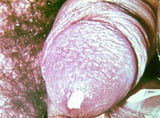 , and chlamydiae Chlamydial, Mycoplasmal, and Ureaplasmal Mucosal Infections Sexually transmitted urethritis, cervicitis, proctitis, and pharyngitis non due to gonorrhea are caused predominantly by chlamydiae and infrequently by mycoplasmas or Ureaplasma sp. Chlamydiae... read more
  .
.
In utero infection, which can occur whatever time before birth, results from overt or subclinical maternal infection. Consequences depend on the amanuensis and timing of infection in gestation and include spontaneous abortion Congenital Syphilis Congenital syphilis is a multisystem infection caused by Treponema pallidum and transmitted to the fetus via the placenta. Early signs are characteristic skin lesions, lymphadenopathy... read more  , intrauterine growth restriction, premature birth Preterm Labor Labor (contractions resulting in cervical change) that begins before 37 weeks gestation is considered preterm. Chance factors include prelabor rupture of membranes, uterine abnormalities, infection... read more , stillbirth Stillbirth Stillbirth is delivery of a dead fetus at > twenty weeks gestation. Maternal and fetal testing is done to make up one's mind the cause. Management is equally for routine intendance later live commitment. Stillbirth,... read more , built malformation (eg, rubella Congenital Rubella Built rubella is a viral infection caused from the female parent during pregnancy. Signs are multiple congenital anomalies that tin can result in fetal death. Diagnosis is by serology and viral... read more ), and symptomatic (eg, CMV Congenital and Perinatal Cytomegalovirus Infection (CMV) Cytomegalovirus infection may be acquired prenatally or perinatally and is the almost common congenital viral infection. Signs at birth, if present, are intrauterine growth restriction, prematurity... read more
  , toxoplasmosis Congenital Toxoplasmosis Congenital toxoplasmosis is acquired past transplacental acquisition of Toxoplasma gondii. Manifestations, if present, are prematurity, intrauterine growth restriction, jaundice, hepatosplenomegaly... read more than
 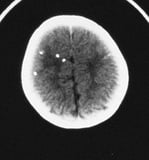 , syphilis Built Syphilis Congenital syphilis is a multisystem infection acquired by Treponema pallidum and transmitted to the fetus via the placenta. Early signs are characteristic skin lesions, lymphadenopathy... read more ) or asymptomatic (eg, CMV) neonatal infection.
Common infectious agents transmitted transplacentally include rubella, toxoplasma Toxoplasmosis Toxoplasmosis is infection with Toxoplasma gondii. Symptoms range from none to benign lymphadenopathy, a mononucleosis-like disease, to life-threatening central nervous organisation (CNS) disease... read more than  , CMV Cytomegalovirus (CMV) Infection Cytomegalovirus (CMV, human herpesvirus blazon v) tin can cause infections that have a broad range of severity. A syndrome of infectious mononucleosis that lacks severe pharyngitis is mutual. Severe... read more , syphilis Syphilis Syphilis is caused by the spirochete Treponema pallidum and is characterized by iii sequential clinical, symptomatic stages separated past periods of asymptomatic latent infection. Common... read more than
  , and Zika virus Zika Virus (ZV) Infections The Zika virus is a musquito-borne flavivirus that is antigenically and structurally similar to the viruses that crusade dengue, xanthous fever, and West Nile virus. Zika virus infection is typically... read more . HIV and hepatitis B Neonatal Hepatitis B Virus (HBV) Infection Neonatal hepatitis B virus infection is usually caused during delivery. Information technology is commonly asymptomatic but tin cause chronic subclinical illness in later childhood or machismo. Symptomatic infection... read more are less usually transmitted transplacentally.
Neonatal infections with herpes simplex viruses, HIV, hepatitis B, group B streptococci, enteric gram-negative organisms (primarily Escherichia coli), Listeria monocytogenes, gonococci, and chlamydiae usually occur from passage through an infected birth canal. Sometimes ascending infection tin can occur if delivery is delayed subsequently rupture of membranes.
Maternal IgG antibodies are actively transported across the placenta, but constructive levels for all organisms are not achieved until nearly term. IgM antibodies do not cross the placenta. Premature infants have decreased intrinsic antibody production and reduced complement activity. Premature infants are besides more likely to require invasive procedures (eg, endotracheal intubation, prolonged 4 access) that predispose to infection.
Symptoms and Signs of Neonatal Infections
Symptoms and signs of infection in neonates tend to be nonspecific (eg, airsickness or poor feeding, increased sleepiness or languor, fever or hypothermia, tachypnea, rashes, diarrhea, intestinal distention). Many built infections acquired earlier birth tin can cause or be accompanied past diverse symptoms or abnormalities (eg, growth brake, deafness, microcephaly, anomalies, failure to thrive, hepatosplenomegaly, neurologic abnormalities).
-
Clinical evaluation
A wide diversity of infections, including sepsis Diagnosis Neonatal sepsis is invasive infection, usually bacterial, occurring during the neonatal period. Signs are multiple, nonspecific, and include diminished spontaneous activeness, less vigorous sucking... read more , should exist considered in neonates who are ill at or shortly after birth, specially those with take a chance factors. Infections such as built rubella Diagnosis Congenital rubella is a viral infection acquired from the mother during pregnancy. Signs are multiple congenital anomalies that tin result in fetal expiry. Diagnosis is by serology and viral... read more than , syphilis Diagnosis Congenital syphilis is a multisystem infection caused by Treponema pallidum and transmitted to the fetus via the placenta. Early on signs are characteristic skin lesions, lymphadenopathy... read more , toxoplasmosis Diagnosis Built toxoplasmosis is acquired by transplacental acquisition of Toxoplasma gondii. Manifestations, if nowadays, are prematurity, intrauterine growth brake, jaundice, hepatosplenomegaly... read more than , and CMV Diagnosis Cytomegalovirus infection may exist caused prenatally or perinatally and is the most common congenital viral infection. Signs at birth, if nowadays, are intrauterine growth restriction, prematurity... read more should exist pursued in neonates with abnormalities such as growth restriction, deafness, microcephaly or other physical anomalies, hepatosplenomegaly, or neurologic abnormalities.
-
Antimicrobial therapy
espinozasunitoomas.blogspot.com
Source: https://www.msdmanuals.com/professional/pediatrics/infections-in-neonates/overview-of-neonatal-infections
0 Response to "What Type of Infection Is Most Likely to Be Transmitted to Baby?"
Postar um comentário